
Containerlines accelerate global port buying spree
The world’s largest containerlines are snapping up stakes in ports at an unprecedented pace, with more than 15 terminal equity deals completed or under negotiation during the first 10 months of 2026, according to Alphaliner.
The liner consultancy says port access is becoming a new battleground as fleet growth outpaces infrastructure investment, with congestion threatening schedule reliability.
Flush with pandemic-era profits and windfalls from Middle East disruption, carriers are increasingly looking to control the infrastructure supporting their networks.
MSC is leading the charge. Through Terminal Investment Limited (TiL), it has acquired stakes in terminals in Peru, Morocco and Ukraine, while a 49% investment in India’s Vizhinjam awaits regulatory approval. Together with BlackRock, MSC remains in talks over Hutchison’s global port portfolio in what could become the largest port acquisition in history. Alphaliner reports that the sellers are still seeking $22.8bn despite two Panamanian terminals being removed from the proposed transaction. MSC has meanwhile abandoned its bid for 50% of Barcelona’s BEST terminal following EU competition concerns.
Hapag-Lloyd is similarly expanding through Hanseatic Global Terminals, which now counts 27 marine terminals against a target of around 30 by 2030. The German carrier has completed investments in India, Florida, Brazil and Rotterdam, with further deals under negotiation in Hamburg and Morocco.
ONE is pursuing terminal stakes across Asia, while Maersk and CMA CGM have strengthened their port interests in Saudi Arabia and elsewhere.
Alphaliner identified in its latest weekly report priority berthing, more predictable costs and greater control over automation and decarbonisation as key motivations. With newbuilding deliveries continuing to outstrip port infrastructure expansion, securing terminal access is becoming increasingly important to liner competitiveness.
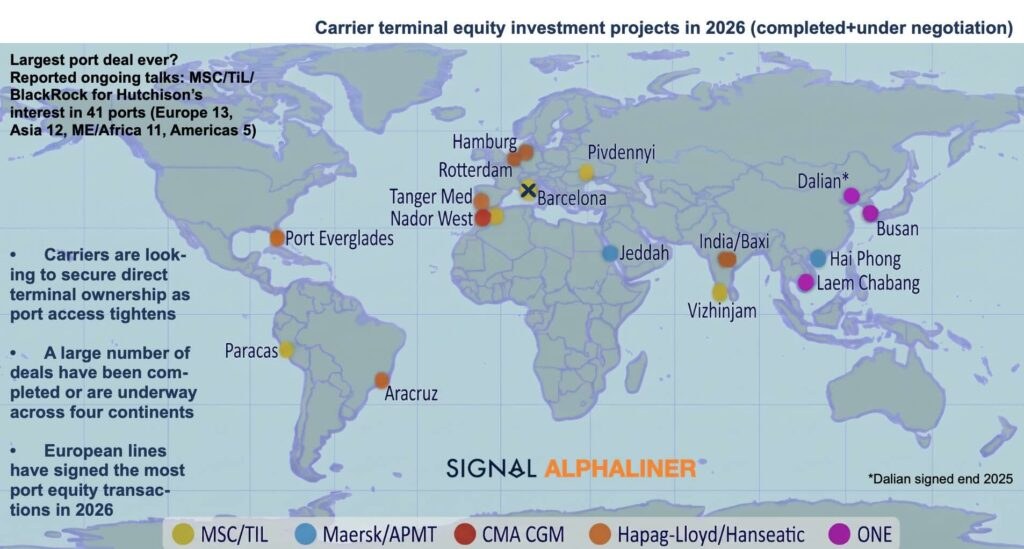
Image source: Splash247
source:Splash247
- Evergreen's 24,000 TEU Ever Acme delivered 4 months ahead of schedule
- Major Chinese ports container volume up 2% in late November
- Japanese insurers to halt ship insurance for all of Russia
- Xeneta container rates alert: calm before storm, as long-term ocean freight rates hold steady ahead of expected new year pain
- APL England's box loss report finds ship's lashings in poor shape
