




西班牙与瑞士企业联手推出LNG加注船 助力航运业脱碳转型
作者: 发布时间:2026年03月15日 浏览量:286 字体大小: A+ A-
图片来自网络,版权属于原作者
来源:Offshore Energy 2026-03-13
翻译:国际海事信息网 檀智 张运鸿
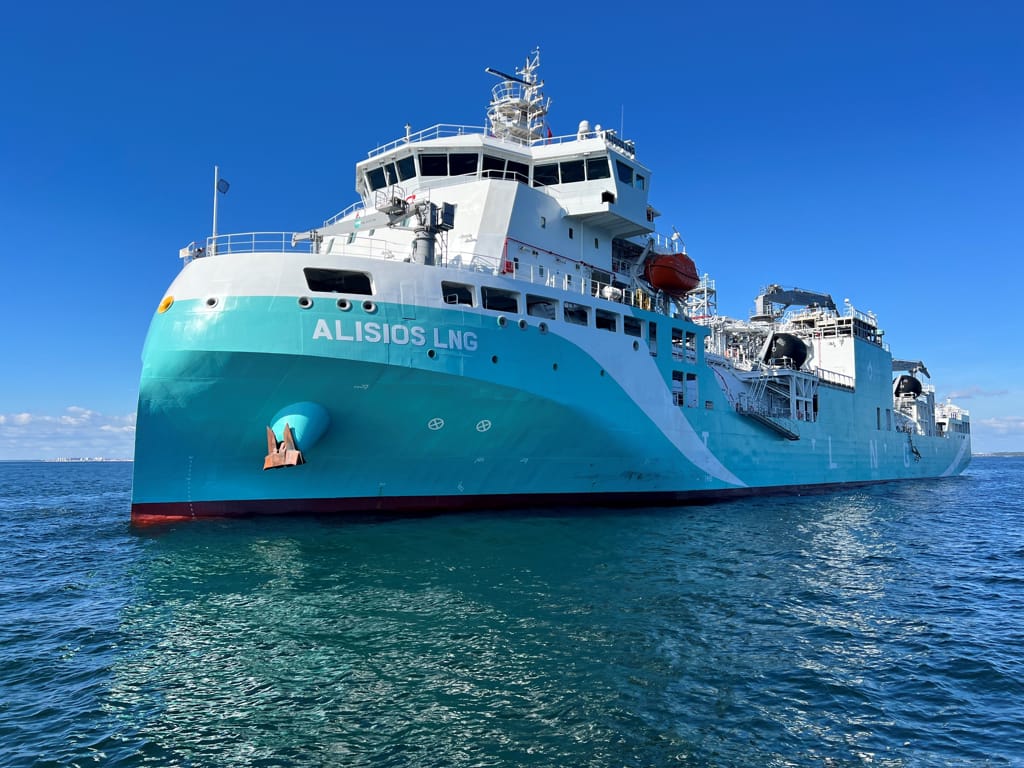
近日,西班牙天然气管道及接收站运营维护企业Enagás,与瑞士最大能源生产商、同时涉足能源贸易及风光电营销的跨国企业Axpo,在西班牙西南部共同推出一艘全新液化天然气(LNG)加注船。
这艘名为“Alisios LNG”的加注船在西班牙西南部韦尔瓦港正式下水,仪式由Enagás首席执行官阿图罗·贡萨洛与Axpo伊比利亚公司总经理伊格纳西奥·索内拉共同主持。该船由Enagás通过其子公司Scale Green Energy拥有,Axpo租赁其用于商业运营,预计将在伊比利亚半岛南部沿海开展作业,推动液化天然气(LNG)及生物液化天然气(bio-LNG)作为海运过渡燃料的广泛应用。
贡萨洛强调:“今天的下水是航运业脱碳基础设施建设的关键里程碑。采用LNG、bio-LNG等更具可持续性的燃料,也有助于实现欧洲的减排目标。”
据悉,该船容量达12500立方米,可有效助力海运脱碳,推动行业进一步扩大LNG和bio-LNG的使用规模。此次项目不仅强化了两家企业在能源转型中的核心作用,也进一步提升了其LNG加注产能。
“Alisios LNG”将依托西班牙境内的一座装载终端开展运营,船身搭载先进技术,可最大限度降低作业过程中的排放。该船可同时供应LNG和bio-LNG两种燃料,预计将为航运业脱碳进程注入新动力。
索内拉表示:“这艘新船的投用,进一步巩固了Axpo在小型LNG加注业务中的领先地位,我们将持续发力,助力海运行业实现脱碳转型。”
该船配备先进的控制系统,机动性极强,可适应多种港口环境作业。随着欧洲新规要求航运业逐步降低排放,该船的投用将使Enagás和Axpo能够更好地响应行业对替代燃料日益增长的需求。
据悉,该船定位为多功能、高效、可靠的可持续燃料供应船舶,搭载专用技术,可确保航程中货物始终保持最佳状态。据测算,在西班牙推广LNG作为船用燃料,到2030年有望减少约200万吨二氧化碳排放,这一效果相当于将100多万辆燃油车替换为电动车。
目前,Enagás共运营4艘加注船,分别为Alisios LNG、Levante LNG、Mistral LNG和Haugesund Knutsen。Axpo则持续扩大bio-LNG业务布局,积极与行业龙头企业建立合作,例如在意大利租赁“Green Pearl LNG”加注船,租期长达10年。这艘7500立方米级别的船舶主要负责LNG和bio-LNG的运输与分销,有效提升了Axpo在地中海区域小型LNG加注业务的速度、灵活性和效率。
Axpo方面补充道:“近年来,西班牙LNG加注业务呈现指数级增长,2023年至2025年间业务量翻了两番。去年,西班牙LNG货运量增长64%,使其成为南欧替代燃料供应的战略枢纽。”
“随着加注船舶及配套基础设施的持续扩容,LNG和bio-LNG目前是最有能力引领航运业能源转型的替代燃料。与传统燃料相比,LNG可100%消除硫氧化物(SOₓ)排放,减少80%至90%的氮氧化物(NOₓ)排放,以及25%的二氧化碳(CO₂)排放。”
(本文版权归国际海事信息网所有,图片版权归原作者,转载请注明出处。)
Enagás, a Spanish company that operates and maintains gas pipelines and terminals, and Axpo, Switzerland’s largest energy producer and an international player in energy trading and the marketing of solar and wind power, have rolled out a new liquefied natural gas (LNG) bunkering vessel in southwestern Spain.
The launch of an LNG bunkering vessel, named Alisios LNG, at the port of Huelva in southwestern Spain was done by Arturo Gonzalo, Enagás’ CEO, and Ignacio Soneira, Axpo Iberia’s Managing Director. The vessel, owned by Enagás through its Scale Green Energy subsidiary and chartered by Axpo for commercial use, is expected to operate along the southern coast of the Iberian Peninsula and promote the use of LNG and bio-LNG as transitional fuels for maritime transport.
Gonzalo underlined: “Today’s launch is a key milestone in the development of infrastructure that contributes to the decarbonisation of the maritime sector. The adoption of more sustainable fuels, such as LNG and bio-LNG, also supports compliance with European emission reduction targets.”
The 12,500-cubic-meter (cbm) capacity vessel supports the decarbonisation of maritime transport, enabling the growing use of LNG and bio-LNG by the sector. The project strengthens the firms’ roles in the energy transition, expanding their LNG bunkering capacity.
Working from one of its loading terminals in Spain, the Alisios LNG is said to incorporate advanced technology to minimise emissions during operations. Supplying both LNG and bio-LNG for maritime transport, the ship is forecast to help further the decarbonisation of the maritime sector.
Soneira highlighted: “Commissioning this new vessel further consolidates Axpo’s leadership in the small-scale LNG bunkering business as we continue our efforts to help the transition to decarbonise maritime transport.”
The vessel’s advanced control systems are deemed to give greater manoeuvrability, allowing it to operate in a variety of different port environments. With new European regulations requiring a progressive reduction in maritime sector emissions, the vessel commissioning is seen as enabling Enagás and Axpo to respond to increased demand for alternative fuels from the industry.
This ship is described as a versatile, efficient and reliable vessel for the supply of more sustainable fuels, equipped with technology designed to maintain its cargo in the best condition throughout the voyage. The use of LNG as a marine fuel in Spain is perceived to have the ability to curb CO2 emissions by around 2 million tonnes by 2030, equivalent to replacing more than 1 million internal combustion vehicles with electric vehicles.
While Enagás operates four vessels, Alisios LNG, Levante LNG, Mistral LNG, and Haugesund Knutsen, Axpo continues to expand its bio-LNG portfolio and forge partnerships with industry leaders, as illustrated by the ten-year charter of the Green Pearl LNG bunkering vessel in Italy. The 7,500 cbm vessel transports and distributes LNG and bio-LNG, improving the speed, flexibility, and efficiency of the company’s small-scale LNG bunkering operations across the Mediterranean.
Axpo elaborated: “LNG bunkering in Spain has grown exponentially over recent years, with activity quadrupling between 2023 and 2025. Last year, LNG cargoes grew by 64 per cent in Spain, positioning it as a strategic hub in southern Europe for the supply of alternative fuels.
“As the number of bunkering vessels and supporting infrastructure continues to expand, LNG and bio-LNG are currently the best-placed alternative fuels to lead the maritime sector’s energy transition. Compared to traditional fuels, LNG eliminates 100 per cent of sulphur oxide (SOX) emissions, between 80 to 90 per cent of nitrogen oxide (NOX) emissions and 25 per cent of CO2 emissions.”
来源:simic